How Home Defense Stun Guns Differ from Carry Models
A stun gun designed for everyday carry is optimized for weight, size, and discreet carry. A stun gun for home defense is optimized for different things entirely:
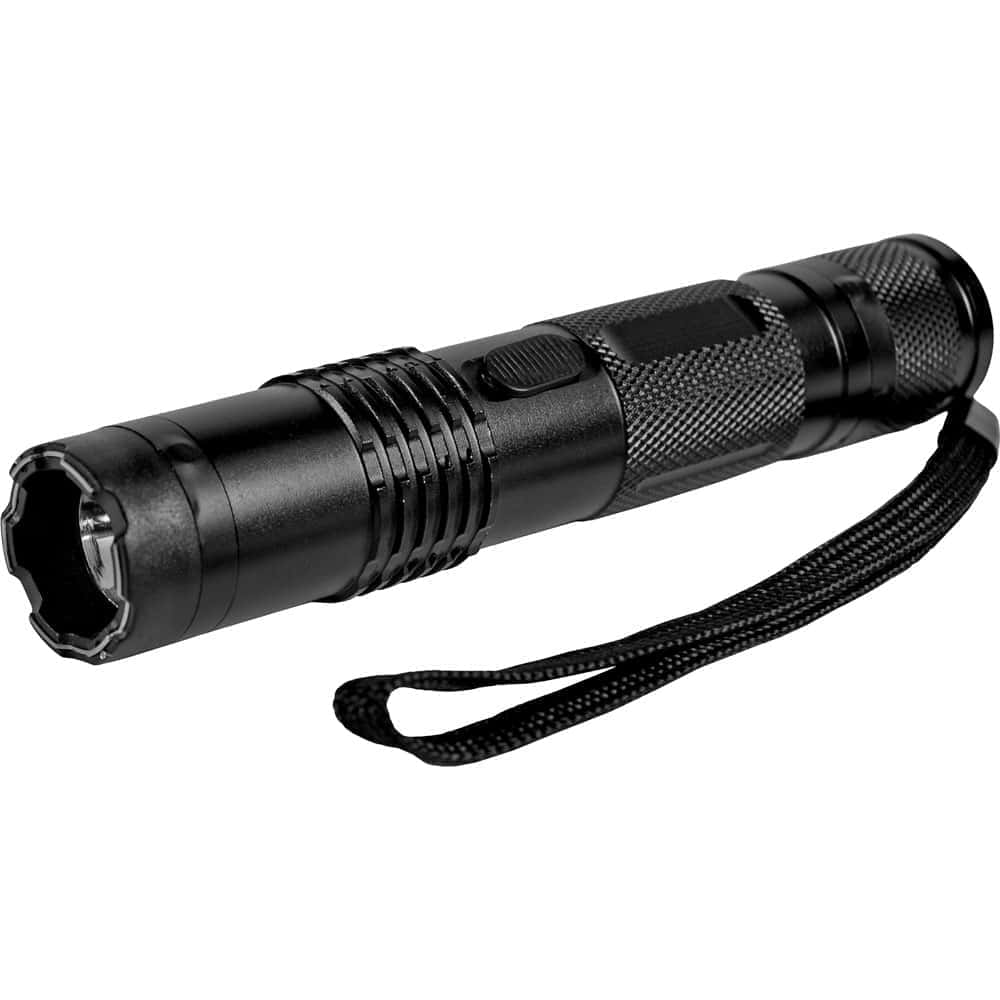
Size works in your favor at home. A longer baton gives you standoff distance. A heavier aluminum body gives you a secondary striking option and a more secure grip in a high-stress situation. A larger flashlight output — 220 to 280 lumens — is temporarily disorienting at close range in a dark hallway and helps you identify what you’re dealing with before acting. For home use, buy toward the larger end of the size range.
Reach changes the engagement distance meaningfully. A standard compact stun gun requires the threat to be within a few inches — essentially touching distance. The Bouncer at 22 inches and the Stun Bat extend that to arm’s length plus, which is the difference between a grapple and a manageable standoff. For a bedroom scenario where you’re likely moving from sleep, reach buys you a critical margin.
The TASER Pulse 2 is a different category entirely. Every other model on this page is a contact weapon — you must touch the device to the threat. The TASER fires barbed probes on wires up to 15 feet, allowing deployment from across a room. It’s single-shot before reloading and costs considerably more, but for households that want non-lethal protection with genuine standoff distance, it’s the only option in its category that we carry.
Placement matters as much as the device. The best stun baton in the world doesn’t help if it’s in a drawer you have to dig through in the dark. Store your home defense stun tool in a consistent, immediately accessible location — a bedside caddy, nightstand surface, or wall-mounted position. Practice reaching it in the dark. The muscle memory you build before a crisis is the only kind that works during one.
Stun Guns vs. Other Non-Lethal Home Defense Options
Stun guns are one layer of a complete non-lethal home defense approach. Here’s how they compare to the alternatives most often combined with them:
Pepper spray for home use provides distance (8–12 feet effective range) and requires less precise deployment than a stun gun. The limitation inside a home is containment: an indoor environment means other occupants may also be affected, especially with fog or cone-pattern sprays. Stream and gel patterns are more controllable indoors but still carry blowback risk. Stun guns have no airborne component — that’s a meaningful advantage inside a house.
Personal alarms are a zero-skill first layer. A 130dB alarm at close range is physically unpleasant enough to disrupt an intruder’s composure while alerting anyone else in the home or nearby. Not a substitute for a stun gun, but a valuable deterrent that requires nothing more than pressing a button.
What most households actually need: A stun baton at the bedside as the primary contact tool, a personal alarm as a signal layer, and if budget allows, the TASER Pulse 2 for households that want non-contact range. This covers close quarters, medium range, and deterrence without requiring a firearm or permit.
Is a Stun Gun Enough for Home Defense?
A stun gun is a serious self-defense tool, but its limitations are worth understanding before you rely on it as your only option:
It requires contact — except for the TASER. Standard stun guns and batons have to touch the threat to work. If an intruder maintains distance or is armed with a firearm, a contact stun tool alone is insufficient. The TASER Pulse 2 addresses this at the cost of higher price and single-shot limitation before reloading.
Contact time determines effectiveness. A 3–5 second contact causes muscle spasms, disorientation, and enough pain to create an escape window for most people. It is not guaranteed incapacitation — the goal is to create time and distance, not permanent stoppage.
Layering is the right strategy. A comprehensive non-lethal home defense plan includes deterrent (alarm), range (TASER or pepper spray), and close-contact (stun baton). A stun gun is a critical layer, not a complete system by itself.